Engineering the Future: Why Global Engineers are Moving to the Arab World (and How to Stand Out)
From the towering skyscrapers of Dubai and Qatar’s cutting-edge infrastructure to Saudi Arabia’s historic giga-projects like NEOM and The Line, the Arab world has become the absolute global epicenter for engineering innovation.
Whether you are a civil engineer, a software developer, a mechanical specialist, or a renewable energy expert, the Middle East offers mega-scale projects, highly competitive tax-free compensation, and career growth opportunities that are simply unmatched anywhere else in the world right now.
However, as thousands of international engineers flock to the region, technical skills alone are no longer the only benchmark for success. To truly lead these historic projects, there is one critical skill that will set you apart from the crowd: Understanding the local language.
Here is why learning Arabic is a game-changer for international engineers in the Arab world:
1. Leading on the Ground and in the Field
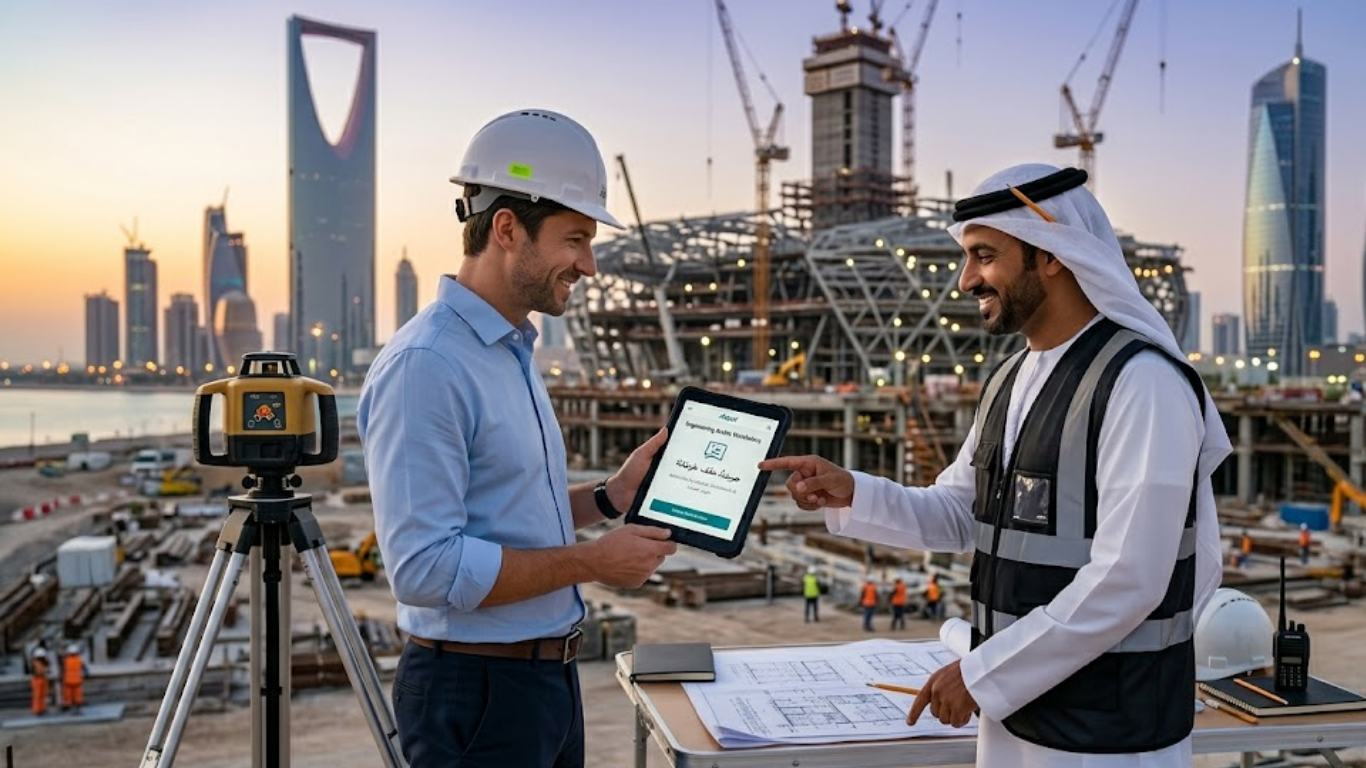
While English is commonly the language of blueprints and international corporate boardrooms, the reality changes on-site. The majority of local contractors, technicians, safety officers, and suppliers communicate natively in Arabic. An engineer who can step onto a construction site or a factory floor and give clear, direct instructions in Arabic gains instant authority, minimizes costly communication errors, and ensures smoother project execution.
2. Navigating Local Codes and Regulations
Every major engineering project must comply with strict local government regulations, environmental codes, and municipality approvals. Dealing with ministries, public utility authorities, and local compliance offices requires navigating a system where Arabic is the official language. Being able to comprehend regulatory feedback or discuss technical adjustments directly with local officials positions you as an invaluable asset to any multinational engineering firm.
3. Building Trust with Stakeholders
In Arab business culture, engineering is as much about human relationships as it is about mathematics. Trust, respect, and mutual understanding are foundational. When you make the effort to speak Arabic—even at a conversational level—with local partners, clients, and investors, it signals deep respect for their culture and a long-term commitment to the region’s vision. It instantly transforms you from a temporary consultant into a trusted partner.
4. Accelerating into Project Management Roles
Technical expertise can get you hired, but cultural fluency gets you promoted. The engineers who transition fastest into high-level Project Manager, Regional Director, or Consultant roles are those who can bridge the gap between international corporate headquarters and local execution. Speaking Arabic unlocks leadership opportunities that non-speakers simply cannot access.
Engineer Your Language Success with Abjad 🛠️📈
As an engineer, you appreciate logic, structure, and efficiency. That is exactly how we built Abjad.
We have dismantled the old, overwhelming ways of teaching Arabic and re-engineered the process for busy professionals. With Abjad, you won’t waste time on irrelevant academic jargon. Instead, we offer practical, interactive, and bite-sized lessons focused on real-life workplace communication, technical context, and daily life in the region.
Don’t just build the future of the Arab world—be the one who leads it.